What Is the Core Difference Between SEO and GEO?
SEO and GEO are two distinct optimization approaches to digital visibility, but they target different platforms and work in different ways. SEO (Search Engine Optimization) is the combination of technical and content work that helps a page rank higher in traditional search engines like Google and Bing. GEO (Generative Engine Optimization) is the strategy of getting your content cited and featured in AI-powered answer engines such as ChatGPT, Google Gemini, and Perplexity.
Put simply: SEO moves you up the search results page; GEO puts you inside the answer the AI gives. As of 2026, both channels drive a significant share of user traffic, so focusing on only one leaves gaps in your digital presence.
A common mistake people make when researching "SEO vs GEO" is confusing GEO with "geo-targeting." The GEO in this article has nothing to do with location. It refers to optimizing content for generative AI engines.
How Does SEO Work?
Traditional SEO is built on search engines crawling and indexing web pages, then listing them according to their ranking algorithms. According to Google's Search Essentials guidelines, a page needs three basic things to rank: crawlability, indexability, and high-quality content.
- Technical SEO: Page speed, mobile-friendliness, structured data (schema markup), and HTTPS security.
- Content SEO: Keyword research, content that matches user intent, and a clear heading hierarchy.
- Authority building: Quality backlinks and E-E-A-T (Experience, Expertise, Authoritativeness, Trustworthiness) signals.
Measurable SEO outcomes include organic click-through rate (CTR), ranking position, and number of sessions. Tools like Ahrefs and Semrush report on these metrics regularly.
How Does GEO Work?
GEO is about understanding how AI answer engines choose content and creating content that fits that logic. When ChatGPT, Perplexity, or Google's AI Overviews answer a question, they select and cite source content based on specific criteria. The goal here is less about earning the click and more about being cited as a source within the answer.
A 2024 study by Princeton University, Georgia Tech, and other institutions found that GEO strategies can boost AI citation rates by up to 40 percent. According to that research, the most effective GEO tactics are:
- Using statistics and verifiable data
- Clearly citing authoritative sources
- Fluent, quotable sentence structures
- An "answer-first" format that answers the question directly in the opening paragraph
- Structured content: lists, tables, and clear subheadings
What Content Do AI Engines Cite?
AI engines generally favor pages with clear definitions, concrete data, and transparent source citations. Sections that deliver the answer in the first few lines are far more likely to be cited than long, filler-heavy introductions. Focusing each section on a single question makes it easy for the model to extract the relevant passage.
What Are the Key Differences Between SEO and GEO?
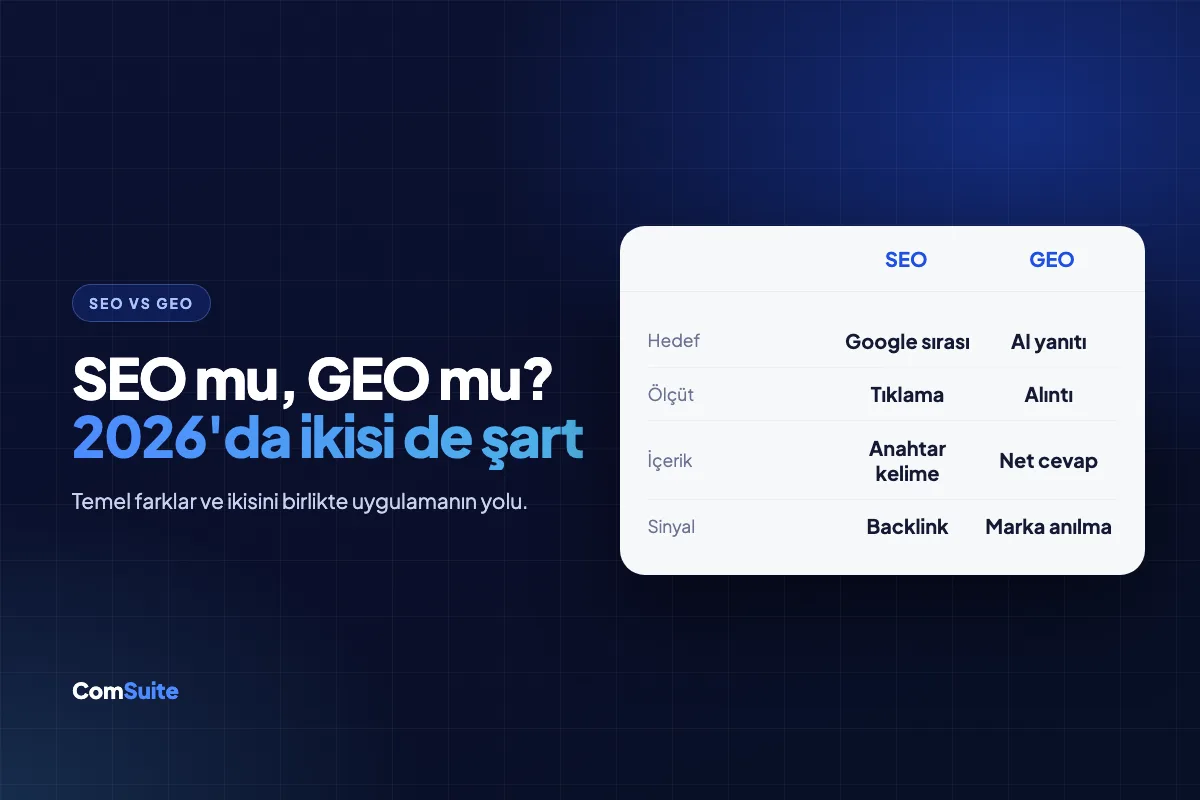
Both approaches put content quality first, but they differ clearly in target platform, success metrics, and optimization techniques. The comparison below sums up the SEO vs GEO difference across five main criteria.
- Target platform: Google, Bing, and Yandex for SEO; ChatGPT, Gemini, Perplexity, and AI Overviews for GEO.
- Success metric: Ranking position and organic traffic for SEO; citation frequency and source attribution rate for GEO.
- Key signals: Backlinks, technical compliance, and CTR for SEO; credibility, data density, and clarity for GEO.
- Content format: Long-form content and keyword alignment for SEO; short, clear, quotable paragraphs for GEO.
- Measurement tools: Google Search Console and Ahrefs for SEO; Perplexity monitoring and AI visibility tools for GEO.
The Difference in the User Journey
With SEO, users scan a list of results, click a link, and land on your site. With GEO, users often get the answer directly inside the AI interface. That's why, in GEO, having your brand name and information mentioned accurately in the answer creates value independent of traffic.
Why Do You Need Both in 2026?
User behavior is changing fast. According to Statista, ChatGPT surpassed 300 million monthly active users worldwide by the end of 2024. Meanwhile, Google still processes more than 8.5 billion searches a day. These two numbers make it clear that the channels don't replace each other; they complement each other.
A brand that only does SEO stays invisible in AI answers and misses a new generation of information seekers. A brand that only does GEO ignores high-converting traditional search traffic from people with purchase intent.
When Should SEO Take Priority?
- High commercial-intent content such as e-commerce product and category pages
- Local business optimization (together with Google Business Profile)
- Quick technical fixes and site health improvements
When Should GEO Take Priority?
- Informational, definitional, and "how-to" content
- Brand awareness and thought leadership goals
- Guides that explain complex products or services
How Do You Apply SEO and GEO Together?
The good news: the two strategies overlap heavily. High-quality, trustworthy, well-structured content satisfies both search engines and AI engines. Experts recommend these steps for an integrated approach:
- Strengthen E-E-A-T signals: Author bios, source citations, and up-to-date data build trust with both Google and AI engines.
- Use structured data (schema): FAQ, HowTo, and Article schemas help your content be understood in both search snippets and AI answers.
- Adopt an answer-first format: The first sentence of every section should answer the question directly; this is critical for both featured snippets and AI citations.
- Update content regularly: AI models prefer current information, and content freshness is becoming an increasingly important GEO signal.
- Add authoritative links: Citing government bodies, academic publications, or industry standards boosts credibility in both channels.
A Practical Roadmap to Get Started
If you're starting from scratch, lock down your SEO foundation first: your site should be crawlable, fast, and mobile-friendly. Next, pick your highest-traffic pages, rewrite their introductions in an answer-first format, and add data and source citations. Finally, regularly test whether your brand gets mentioned in AI answers by asking specific questions.
How Do You Measure Performance?
For SEO, track impressions, clicks, and average position in Search Console. For GEO, ask AI tools your target questions at regular intervals and record whether your brand is cited as a source. Reading the two datasets side by side reveals which content performs best in which channel.
Why Does Understanding the SEO vs GEO Difference Give You a Strategic Edge?
Most brands still track only traditional SEO metrics. That opens a real window of competitive advantage for brands that invest in GEO early. A brand cited as a source in AI answer engines earns high trust and visibility without spending on paid ads.
In short, SEO and GEO aren't rivals; they're complementary. Making room for both in your 2026 digital marketing strategy lets you protect your organic traffic while capturing the new visibility opportunities of the AI era.
Frequently Asked Questions
What is the core difference between SEO and GEO?
SEO aims to rank content higher in search engines like Google. GEO (Generative Engine Optimization) aims to get content cited in AI answer engines like ChatGPT, Gemini, and Perplexity. One is built around rankings, the other around appearing inside the answer.
Why do SEO and GEO matter in 2026?
People now find information through both search engines and AI assistants. SEO protects traditional traffic from people with purchase intent, while GEO secures visibility in AI answers. Together, they help brands reach a much wider audience.
Should SEO be focused only on content?
No. SEO includes many elements, such as technical optimization, link building, and user experience. Content matters, but the other factors are also critical to success.
How do you implement GEO strategies?
For GEO, write content in an answer-first format, add statistics and credible source citations, and structure it with lists and clear subheadings. Keeping content current and using structured data also makes it easier for AI engines to understand your content.
How do SEO and GEO work together?
Both approaches rest on the same foundation: trustworthy, well-structured, up-to-date content. SEO helps your page get found, while GEO helps that content get used as a source in AI answers. That's why running them under a shared content strategy delivers the best results.
Which tools should you use for SEO and GEO?
For SEO, you can use tools like Google Search Console, Google Analytics, Ahrefs, and Semrush. For GEO, AI visibility monitoring tools and regular manual testing of your target questions are useful. Use these tools together to track performance and optimize your strategy.