What Is a Small Business Website?
A small business website is a digital platform a business creates to promote its products and services online, communicate with customers, and make sales. It is an online storefront that showcases your business identity, your products or services, and your contact information, accessible to potential customers 24/7. Unlike a physical store, it knows no geographic boundaries and can be maintained at a very low cost.
Current plans: To see all ComSuite plans and pricing in a single table, visit our website pricing page.
Why Do You Need a Website?
According to the Turkish Statistical Institute (TurkStat), internet usage among the adult population has risen above eighty percent. This shows that the vast majority of potential customers turn to the internet before looking for a product or service. A small business without a website struggles significantly to reach this audience.
In addition, a website gives your business a professional identity and, unlike social media profiles, gives you full control over a space that belongs entirely to you.
Benefits of a Website for Small Businesses
- 24/7 availability: Customers can find information and place orders outside business hours.
- Cost efficiency: It is far more affordable than traditional advertising channels.
- Credibility: Businesses with a professional website are perceived as more trustworthy by customers.
- Measurability: Data such as visitor counts, page views, and conversion rates can be tracked easily.
- Expanded market: You can move beyond local boundaries and reach a wider customer base.
Professional Website Design
Professional website design is about more than visual appeal. Good design combines fast load times, mobile compatibility, and a clear navigation structure. According to Google's Core Web Vitals criteria, a page loading in under 2.5 seconds is critical for both user experience and search engine rankings.
Professional design for small businesses doesn't have to be expensive. Many modern website builders offer professional-looking, template-based designs.
The Importance of User-Friendly Design
A user-friendly website helps visitors find the information they need with ease. According to Nielsen Norman Group research, users tend to leave a site if they can't find what they're looking for within a few seconds. For this reason, pay attention to the following elements in your design:
- A clear, simple homepage layout
- Easy-to-read fonts and sufficient color contrast
- A mobile-friendly (responsive) structure
- Fast-loading images and optimized media files
- Clear call-to-action (CTA) buttons
Steps to Build a Small Business Website
Building a website becomes much easier when you follow a plan. By following the steps below, you can achieve a professional result.
Define Your Target Audience
Before building your website, you need to clearly define who you are speaking to. Your target audience's age range, interests, location, and buying habits directly influence your site's content and design decisions. For example, an e-commerce site aimed at a younger audience should be visual-heavy and built for fast browsing, while a service site for corporate clients can be more text-focused and information-rich.
When defining your target audience, try to answer these questions:
- What problems are my customers trying to solve when they look for me?
- What sets me apart from my competitors?
- What devices are my customers likely to use to visit my site?
Develop a Content Strategy
A good content strategy makes your website visible in search engines and turns visitors into customers. These are the core pages a small business website should have:
- Home: A short, effective introduction summarizing your business and the value you offer.
- About Us: A page where you share your story and values and build trust.
- Product/Service Page: Detailed descriptions of the products or services you offer.
- Contact Page: Phone, email, and, if applicable, your physical address.
- Blog or News: Informative content related to your industry (highly valuable for SEO).
Free Website Builders
For small businesses on a tight budget, free or low-cost website builders can be a good starting point. The table below compares commonly used tools by their key features:
| Tool | Free Plan | E-Commerce Support | Customization |
|---|---|---|---|
| WordPress.com | Yes | On paid plans | High |
| Wix | Yes | On paid plans | Medium-High |
| Google Sites | Yes | No | Low |
| Shopify | Free trial | Yes | Medium |
Free plans typically come with a subdomain (for example, business.wix.com) and limited storage. If you want to accept payments or use a custom domain, you may need to upgrade to a paid plan.
Improve Your Website with SEO
Search engine optimization (SEO) helps your website rank higher on search engines like Google. For small businesses, local SEO is especially important, because searches like "cafe near me" or "web design in İzmir" make it easier to reach local customers directly.
Using Keywords
Keywords are the phrases potential customers type into search engines. Using keywords naturally on your small business website helps search engines match your site with relevant queries. Here are some practical steps you can follow:
- Identify your target keywords with Google Search Console or free keyword tools.
- Focus on a single primary keyword for each page.
- Use keywords in your headings, meta descriptions, and first paragraph.
- Add descriptive alt text to your images.
Customer Relationships and Your Website
Your website is one of the most effective digital tools for building and maintaining customer relationships. With a contact form, a live chat plugin, or a frequently asked questions (FAQ) page, you can answer customer questions quickly. You can also add an email newsletter signup to keep your customers informed about promotions and news.
Customer reviews and testimonials are also key elements that boost your website's credibility. According to experts, the vast majority of consumers read online reviews before making a purchase decision. That's why asking your satisfied customers to leave reviews and showcasing them on your site is a highly effective way to earn the trust of new customers.
Frequently Asked Questions
How much does a website cost for a small business?
The cost of a small business website typically ranges from 1,000 TL to 10,000 TL. The cost may increase depending on design, content, and features.
How long does it take to build a small business website?
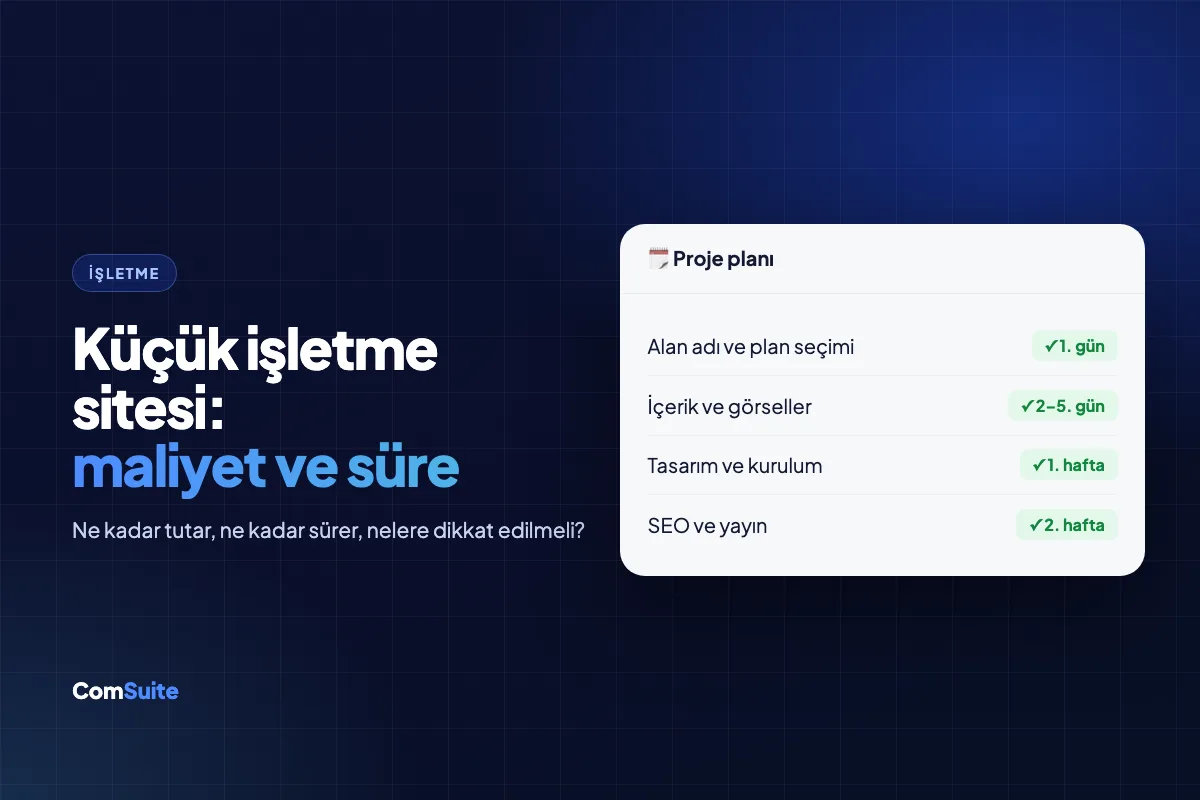
Building a small business website usually takes between 2 and 8 weeks. This timeline may vary depending on the complexity of the project and its requirements.
What should small businesses keep in mind when building a website?
Small businesses should focus on a user-friendly design, mobile compatibility, and fast loading times. SEO optimization is also important.
Which platforms are recommended for a small business website?
Platforms like WordPress, Wix, and Shopify are recommended for small businesses. These platforms offer user-friendly interfaces and a variety of template options.
How should content be prepared for a small business website?
Content should speak to your target audience and clearly explain the products or services your business offers. Keyword optimization is also important.
How often should a small business update its website?
Small businesses should update their websites at least once a month and keep their content fresh. This improves SEO performance and keeps users engaged.