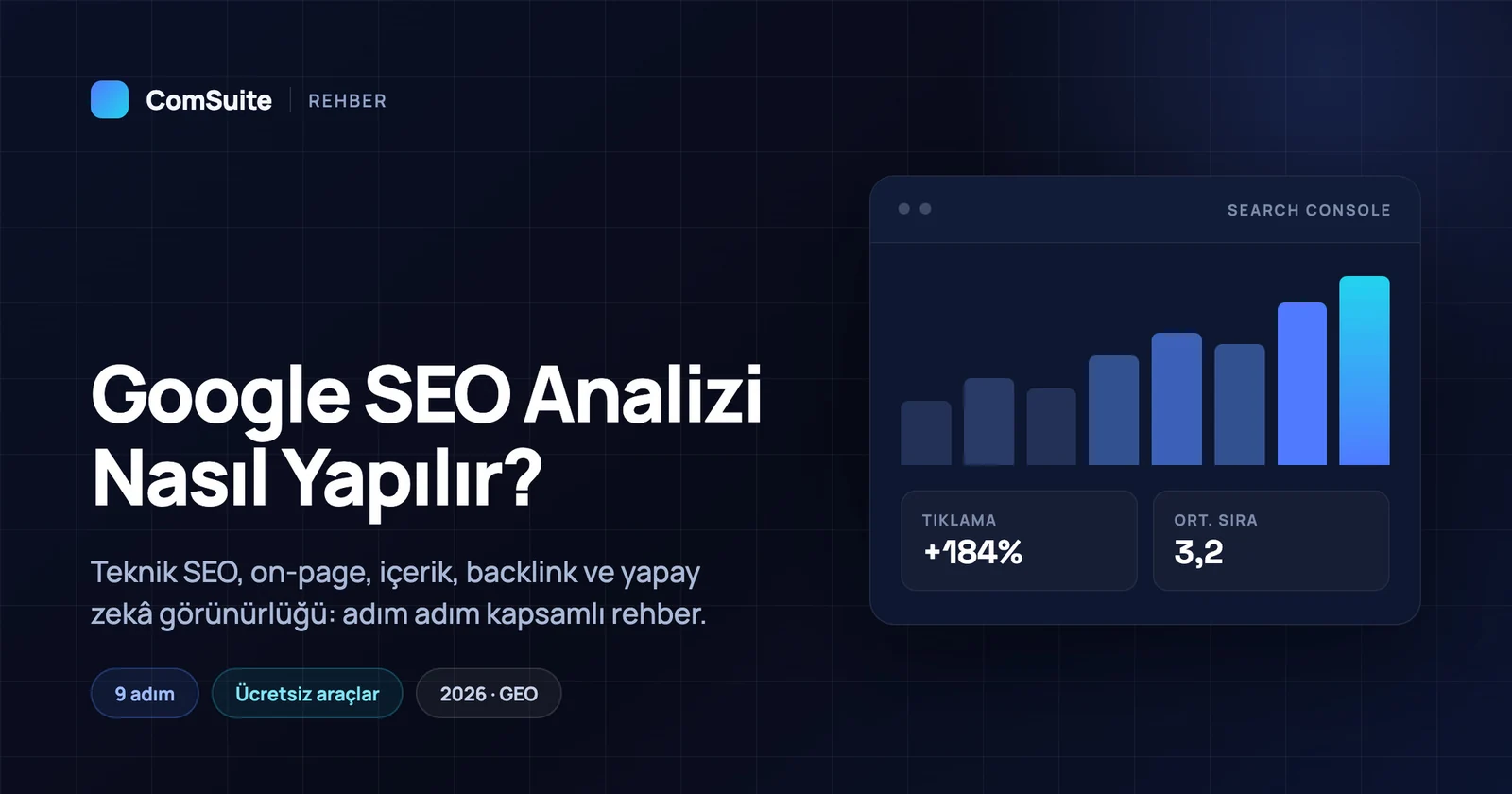
A Google SEO analysis is a systematic review that uncovers why a website isn't showing up enough in search engines and gives you a roadmap for growth. The good news: if you know the right method and tools, you can assess your site's SEO health largely on your own. In this guide, we walk you step by step through how to run a Google SEO analysis from beginner to advanced level, which tools to use, which metrics to track, and the new dimension changing the game in 2026: AI visibility.
What Is a Google SEO Analysis?
An SEO analysis is the process of evaluating a site's technical foundation, content, user experience and link (backlink) profile against Google's ranking criteria. The goal isn't to produce a single "score"; it's to identify where your site is strong and where it's weak, and to prioritize which improvements will deliver the highest return. In short, an SEO analysis lets you make decisions based on data, not guesswork.
Why Regular SEO Analysis Is a Must
Google rolls out thousands of algorithm updates every year; your competitors keep publishing content, your page speed slips over time, and broken links pile up. Without regular analysis, you won't notice these silent losses. Instead of asking "why?" after your traffic drops, regular analysis lets you spot problems before they happen. Analysis also reveals new content and keyword opportunities.
The 5 Dimensions of SEO Analysis
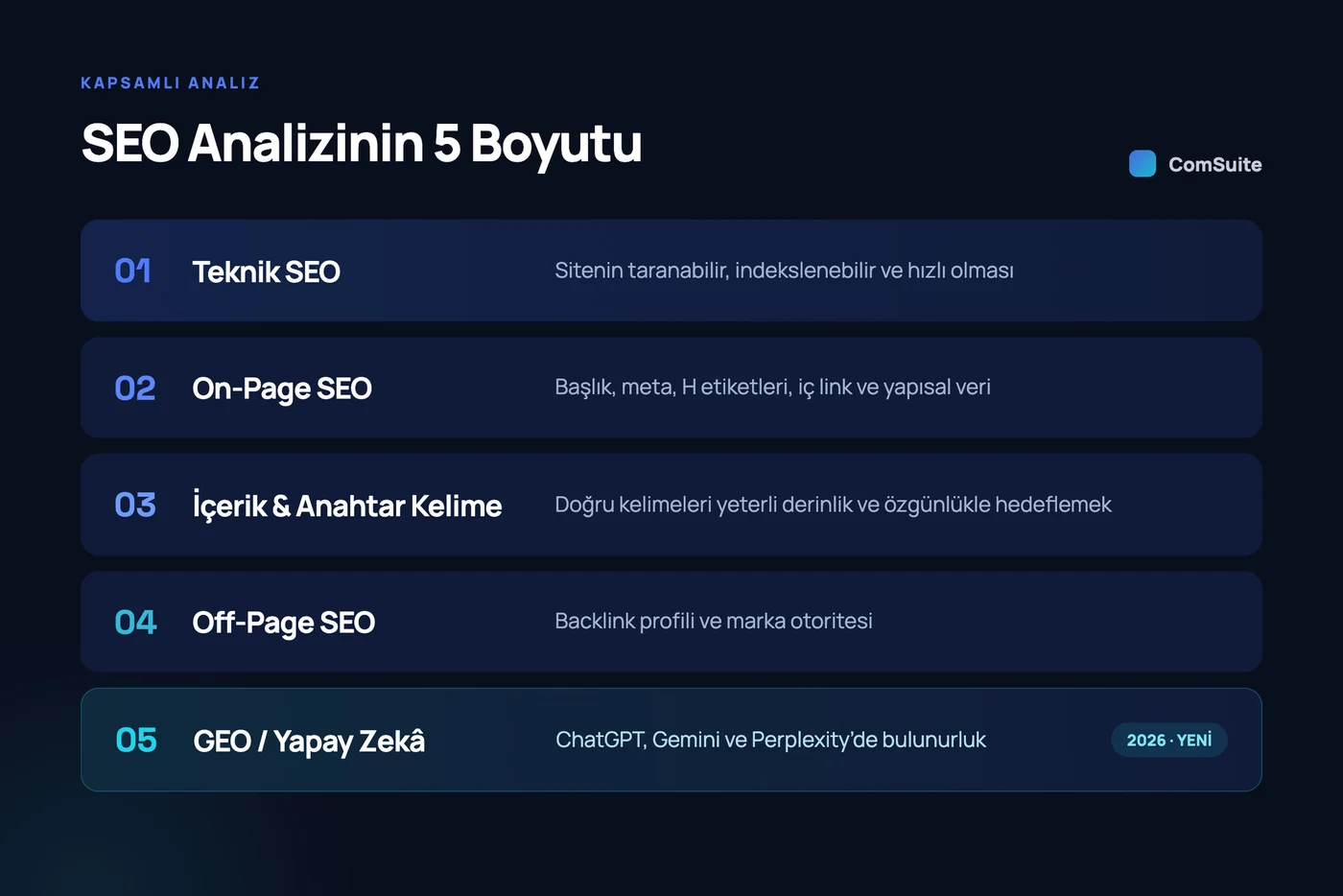
A comprehensive Google SEO analysis covers five layers together:
- Technical SEO: Making sure your site is crawlable, indexable and fast.
- On-Page SEO: Titles, meta tags, heading tags, internal links and structured data.
- Content & Keywords: Targeting the right keywords with sufficient depth and originality.
- Off-Page SEO: Your backlink profile and brand authority.
- GEO / AI Visibility: Discoverability in tools like ChatGPT and Gemini (the new dimension of 2026).
How to Do a Google SEO Analysis, Step by Step
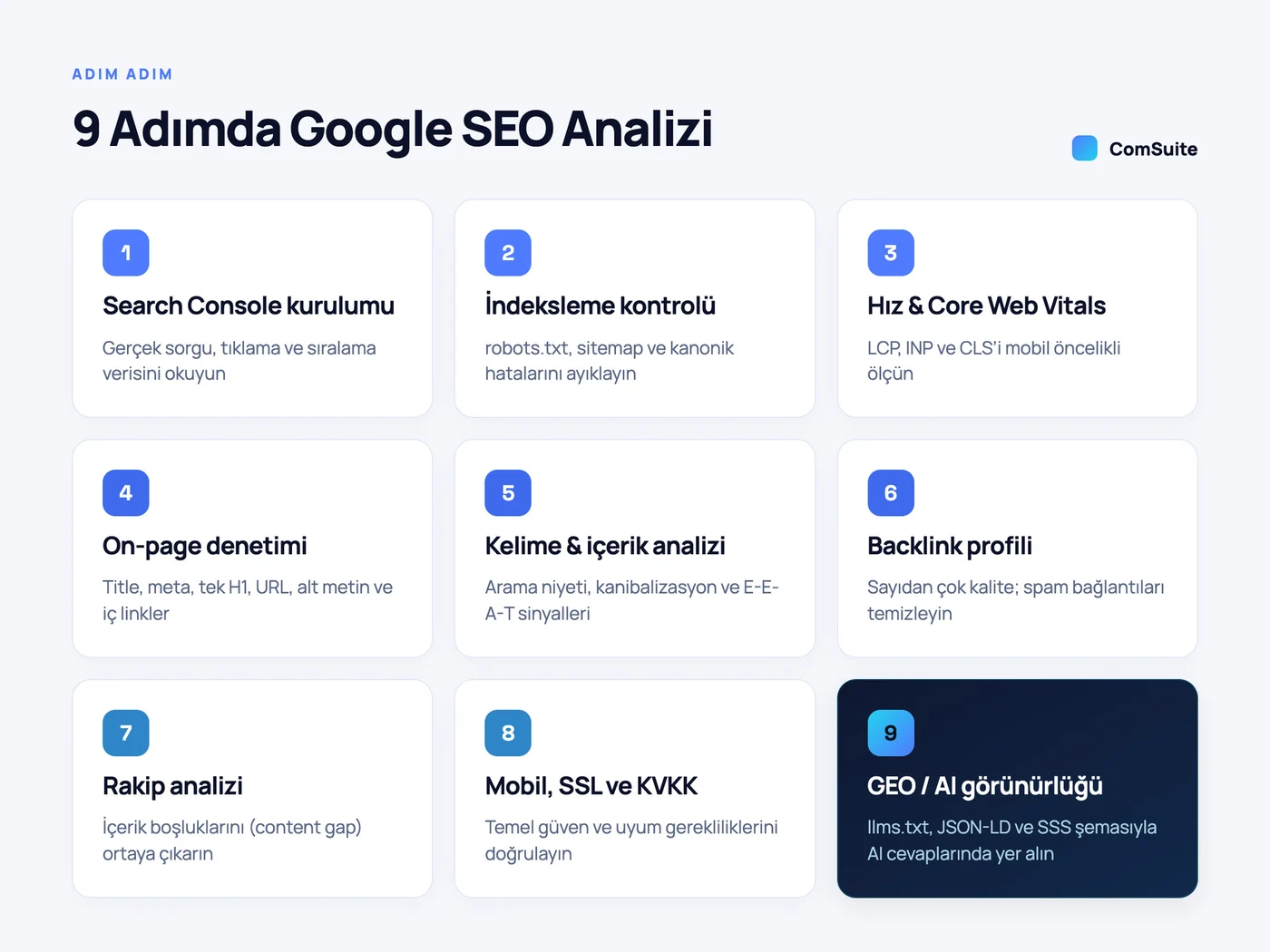
1. Set Up Google Search Console and Read the Data
Every analysis starts here. Google Search Console (GSC) is free and shows your site's real performance on Google: which queries you appear for, clicks and impressions, average position, and indexing (Coverage) errors. In the "Performance" report, pages with a low click-through rate (CTR) but high impressions are your quick-win opportunities.
2. Check Your Indexing Status
If Google can't see your pages, it can't rank them. Use the site:yourdomain.com search to see how many of your pages are indexed, and review the reasons for non-indexed pages (noindex, canonical, crawl blocks) in GSC's "Pages" report. Make sure your robots.txt and sitemap.xml files are configured correctly.
3. Measure Page Speed and Core Web Vitals
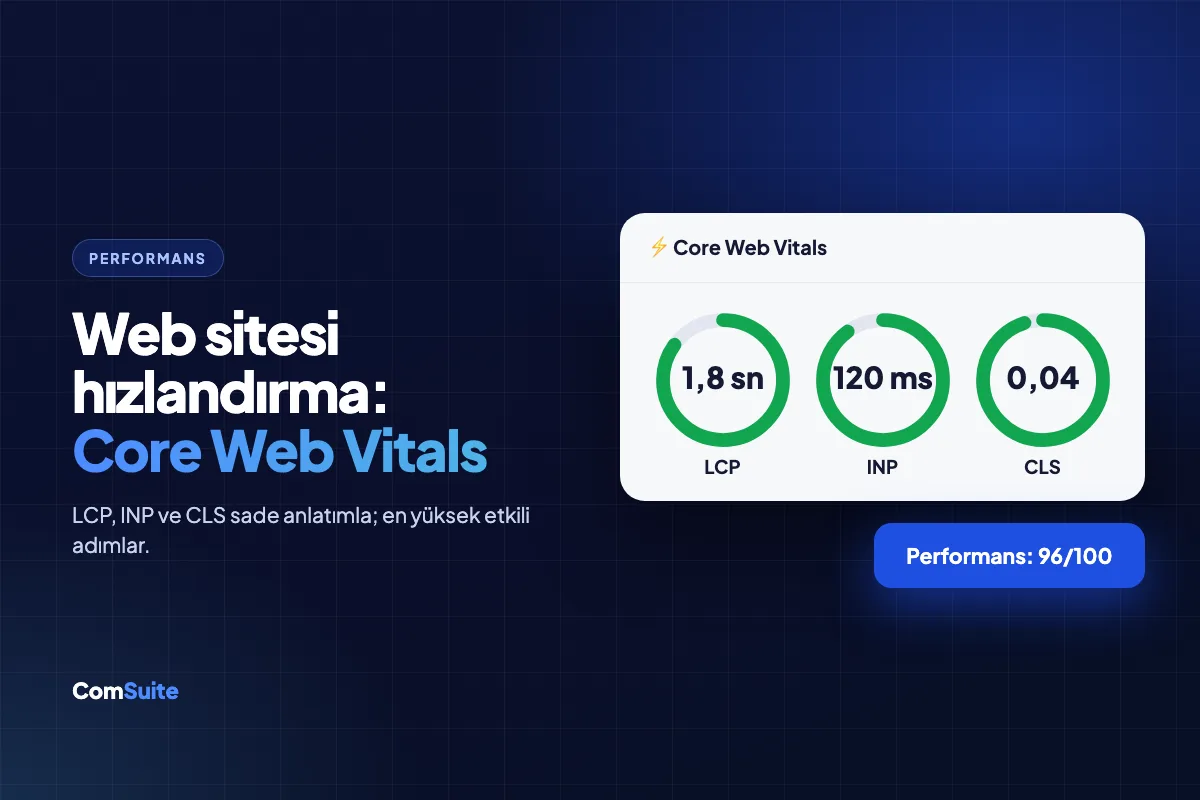
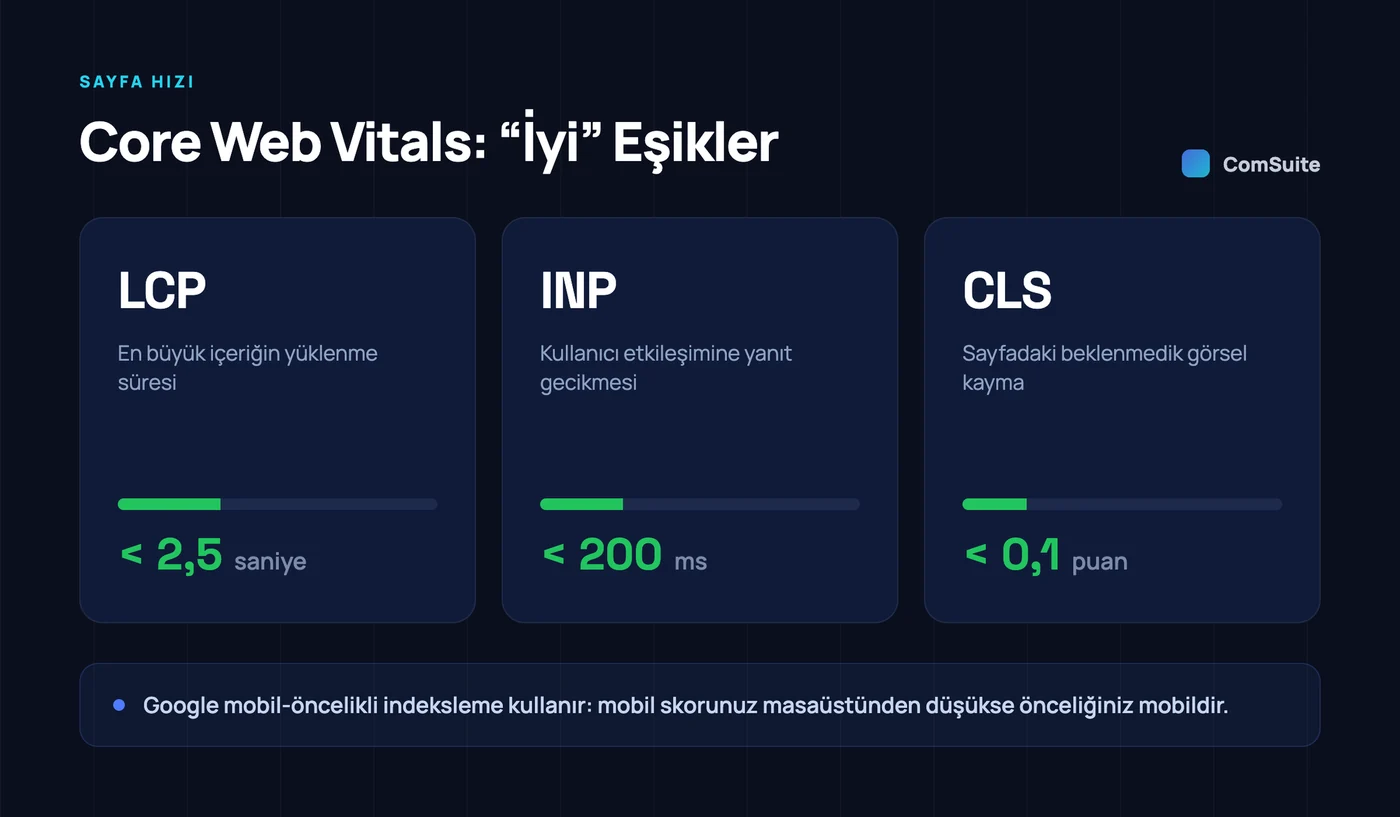
Speed is now a direct ranking factor. Use Google PageSpeed Insights to measure your mobile and desktop scores, especially your Core Web Vitals metrics (LCP – largest content load time, INP – interaction delay, CLS – visual shift). If your mobile score is lower than desktop, mobile is your priority, because Google uses mobile-first indexing.
4. Audit On-Page Elements
On every important page, check for: a unique title tag containing your keyword, a compelling meta description, a single H1 and a logical H2–H3 hierarchy, a descriptive URL, alt text on images, and internal links to related pages. Missing or duplicate titles are among the most common and easiest issues to fix.
5. Run a Keyword and Content Analysis
Do your target keywords actually match your pages? Does your content satisfy the user's search intent (informational, comparison, purchase)? If you have multiple pages targeting the same keyword (keyword cannibalization), they weaken each other. Content freshness, depth, and E-E-A-T (experience, expertise, authoritativeness, trustworthiness) signals are also evaluated at this step.
6. Review Your Backlink (Off-Page) Profile
Quality links from other sites are a vote of confidence in Google's eyes. Quality matters far more than the number of backlinks: a few links from relevant, reputable sites are worth more than hundreds of spam links. Identifying harmful or spam links and disavowing them when necessary is also part of the analysis.
7. Analyze Your Competitors
Who is on the first page for your target keywords? Look at which content your competitors cover better than you and which keywords they outrank you on. This is the fastest way to see your own content gaps. When benchmarking the overall quality of your website, you can also use our guide to evaluating the best web design companies.
8. Verify Mobile Compatibility, SSL, and KVKK
Make sure your site works flawlessly on mobile, is secured with an SSL certificate (https), and, if you collect form data, complies with Turkey's data protection law (KVKK) — including a privacy notice and cookie management. These are fundamental requirements for both rankings and user trust.
9. Evaluate Your AI (GEO) Visibility
This is the biggest difference in 2026. Users no longer ask questions only on Google; they ask ChatGPT, Gemini, and Perplexity too. GEO (Generative Engine Optimization) helps ensure your brand is recommended in these AI answers. Its technical building blocks are llms.txt, JSON-LD entity markup, FAQ schema, and a semantic content structure. You can measure your site's AI visibility in 1 minute with our free visibility test.
Curious about your site's SEO report card on Google?
Let our expert team analyze your site for free and give you a concrete, prioritized roadmap. Request Your Free SEO Analysis →
Free SEO Analysis Tools
Professional tools (Ahrefs, Semrush) are powerful but paid. Here are free tools that are enough for a basic analysis:
| Tool | What It Does |
|---|---|
| Google Search Console | Real ranking, click, impression, and indexing data |
| PageSpeed Insights | Page speed and Core Web Vitals measurement |
| Google Analytics 4 | Traffic sources, user behavior, and conversions |
| Rich Results Test | Structured data (schema) validation |
| Mobile-Friendly Test | Mobile compatibility check |
| Bing Webmaster Tools | Additional keyword and site crawl data |
Metrics to Look at in an SEO Report
- Organic traffic: The trend in search visitors over time.
- Keyword rankings: Your position for target keywords and how it changes.
- Click-through rate (CTR): Clicks versus impressions — an indicator of your title and meta quality.
- Number of indexed pages: The share of pages Google actually sees.
- Core Web Vitals: LCP, INP, and CLS values within the "good" threshold.
- Conversion rate: How much of your traffic turns into leads or sales — the metric that matters most.
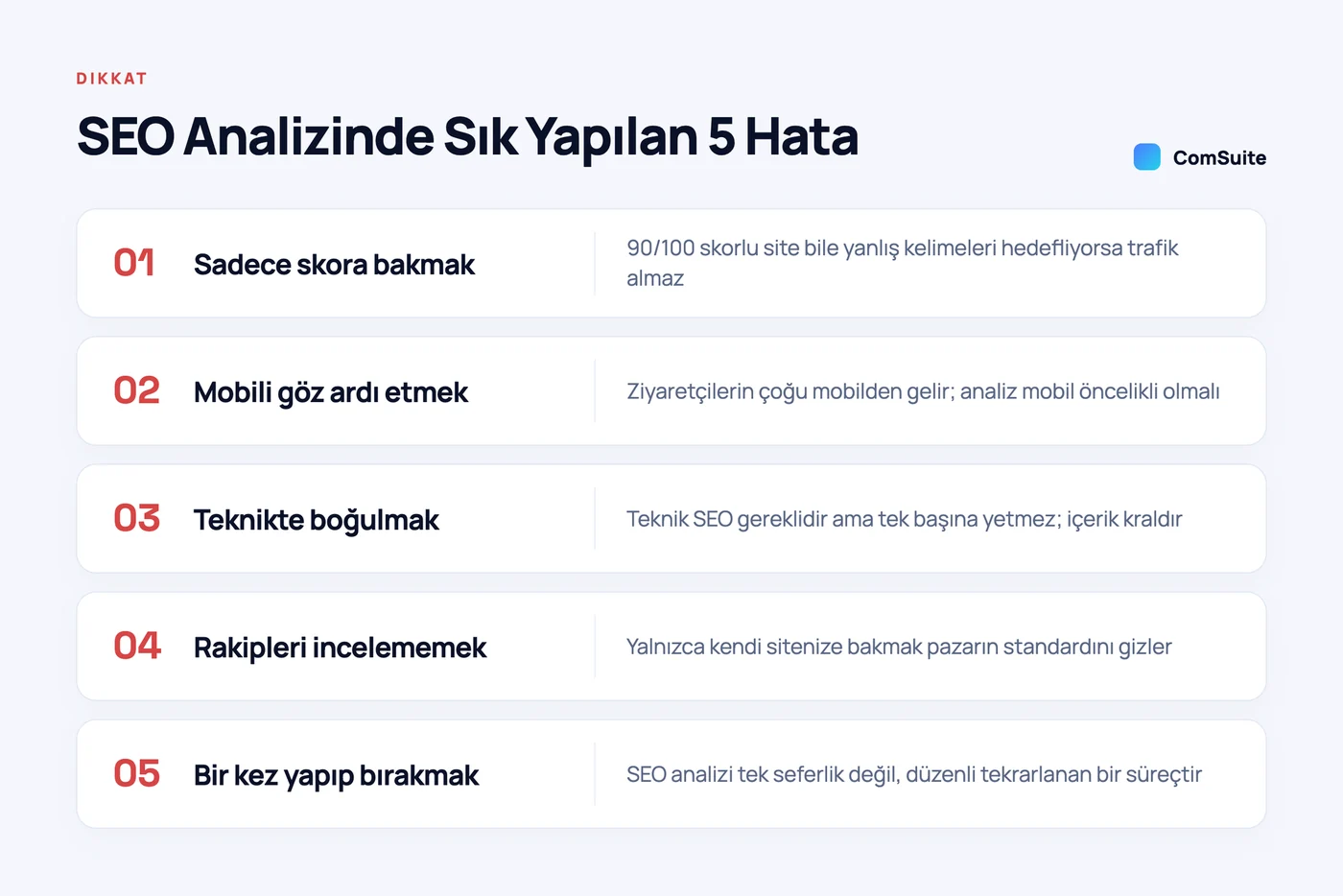
5 Common Mistakes in SEO Analysis
- Looking only at the score: Even a site with a 90/100 score won't get traffic if it targets the wrong keywords.
- Ignoring mobile: Most visitors come from mobile, so your analysis should be mobile-first.
- Forgetting content and drowning in technical details: Technical SEO is necessary but not enough on its own; content is king.
- Not studying your competitors: Looking only at your own site means missing the standard of your market.
- Doing it once and walking away: SEO analysis isn't a one-time task; it's a process you repeat regularly.
Should You Do It Yourself or Get Professional Help?
You can run a basic analysis yourself by following the steps above. However, interpreting the findings correctly, prioritizing them, and turning them into an action plan takes experience. If you're short on time, or you find yourself saying, “I can see the data but I don't know what to do with it,” an expert review can make a big difference. While you evaluate whether you need a new site, check out our website pricing guide and our pricing page for current plans.
Conclusion
A Google SEO analysis is the compass of your digital growth. When you work through the layers in order, starting with Search Console and moving through technical, on-page, content, backlinks, and AI visibility, you'll see clearly where your site is losing ground and where you should invest. Repeat the analysis regularly, prioritize findings by impact versus effort, and tackle the highest-return work first. If you're not sure where to start, you can request your free SEO analysis below.
Curious how your site scores on Google SEO?
Let our expert team analyze your site for free and give you a prioritized, concrete roadmap. Request Your Free SEO Analysis →