What Are the Benefits of Building a Local Website?
Building a local website means optimizing the digital presence of businesses operating in the Turkish market for local users. A local website is a digital platform aimed at users in Turkey, offering Turkish-language content and structured to gain visibility in local search engines. Choosing this approach is not just a technical decision; it is also a strategic marketing choice.
- Higher rankings in local search results: On platforms such as Google Turkey and Yandex, sites with a .tr extension and Turkish content are prioritized in local searches.
- User trust: The vast majority of Turkish consumers place more trust in sites that serve them in their local language and with local payment methods.
- Low latency: Servers hosted in Turkey deliver faster page load times to local users, which directly affects user experience and your SEO score.
- Legal compliance: Complying with the requirements of Turkey's data protection law (KVKK) is much easier with local infrastructure.
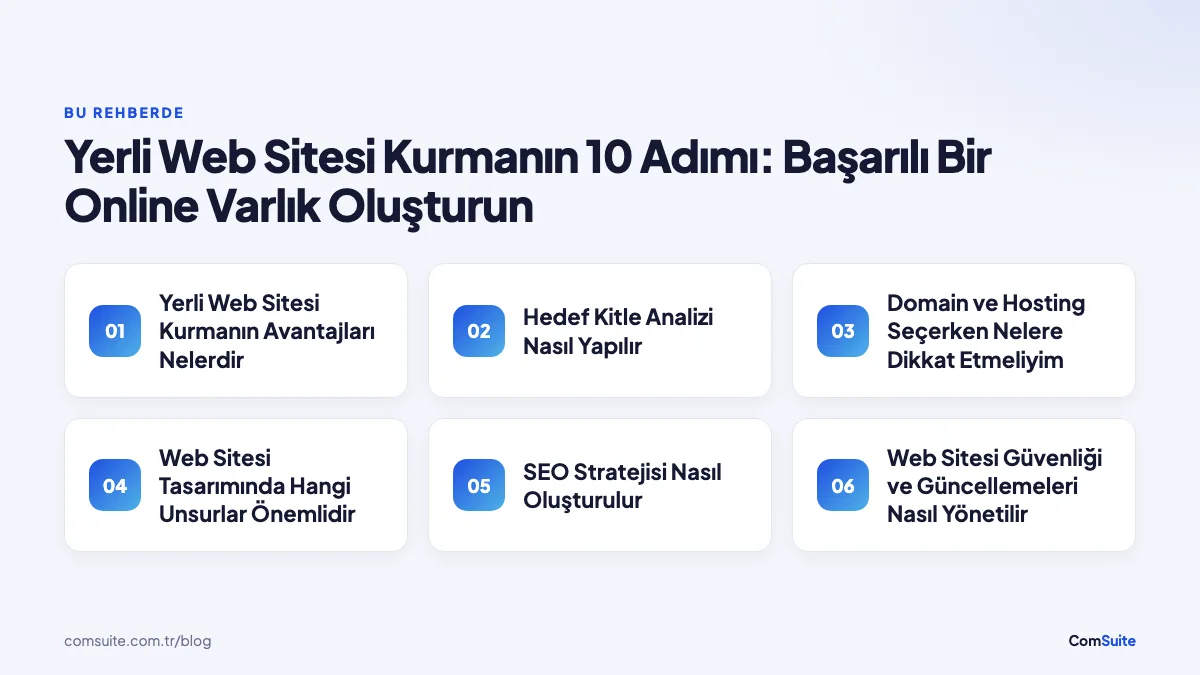
How Do You Analyze Your Target Audience?
The first step of any successful local website setup guide is to clearly define who you are speaking to. A website built without target audience analysis won't reach the right users, and conversion rates will stay low.
You can use the following methods for market research:
- Google Analytics and Search Console: If you already have a digital presence, analyze which demographics are visiting you.
- Competitor analysis: Review the content structure, keywords, and user reviews of the leading sites in your industry.
- Surveys and user interviews: Reach out to potential customers directly to learn about their needs, expectations, and digital habits.
- Social media listening tools: Use Brandwatch or similar tools to follow Turkish-language conversations related to your industry.
Use the data you gather to create a user persona. A persona should include age, occupation, digital habits, and purchase motivations. This step guides the entire process, from content planning to design decisions.
What Should I Consider When Choosing a Domain and Hosting?
Your choice of domain and hosting directly affects both your website's technical performance and your brand perception. A wrong choice can lead to serious problems down the road, both in cost and in SEO.
Key Criteria for Choosing a Domain
- .com.tr or .tr extension: For sites targeting the Turkish market, local extensions send search engines a geographic targeting signal. A .com.tr extension requires a company registered with BTK or a trade registry number.
- Short, memorable name: If possible, choose a domain that matches your brand name and avoids Turkish characters.
- Including a keyword: Having an industry-related keyword in your domain name offers a small but meaningful SEO advantage.
What to Look for When Choosing Hosting
| Hosting Type | Advantage | Best For |
|---|---|---|
| Shared Hosting | Low cost | Small, low-traffic sites |
| VPS (Virtual Server) | Flexibility and control | Mid-sized businesses |
| Cloud Hosting | Scalability | Sites with fluctuating traffic |
| Dedicated Server | Maximum performance | High-traffic e-commerce sites |
Hosting your servers in Turkey also offers an advantage for KVKK compliance. Choosing providers with data centers in Turkey reduces the legal obligations related to transferring personal data abroad.
Which Elements Matter in Website Design?
Design isn't just about aesthetics; it plays a critical role in user experience (UX) and conversion rate optimization (CRO). Google's Core Web Vitals metrics treat parameters such as page load speed, interaction time, and visual stability as direct ranking factors.
- Mobile compatibility: Most internet usage in Turkey takes place on mobile devices. Under Google's mobile-first indexing policy, your site must have a responsive design.
- Speed optimization: Page load time should not exceed 3 seconds. Image compression, cache management, and CDN usage help reduce it.
- Accessibility: Design that complies with WCAG 2.1 standards makes access easier for users with disabilities and meets legal obligations.
- Trust signals: SSL certificates, clear contact information, customer reviews, and payment security badges positively influence the purchase decisions of Turkish users.
- Clear call-to-action (CTA) buttons: Visible, easy-to-understand buttons that guide users increase conversion rates.
How to Build an SEO Strategy
One of the most critical stages of any guide to building a local website is planning your search engine optimization strategy from the start. SEO shouldn't be considered after the site goes live; it should be part of the process from the design and content stages.
Technical SEO Fundamentals
- Create an XML sitemap and submit it to Google Search Console.
- Configure your robots.txt file correctly.
- Use canonical tags to prevent duplicate content issues.
- Use structured data (Schema Markup) to earn rich snippets in search results.
How to Build a Content Strategy
Your content plan should be based on keyword research and the user questions that come out of your target audience analysis. Use tools like Google Keyword Planner and Ahrefs to identify keywords with high monthly search volume and manageable competition.
- Blog and guide content: Long-form content that answers questions in your industry is the most sustainable way to attract organic traffic.
- Local SEO: Keep your Google My Business profile up to date, and regularly manage your address, business hours, and customer reviews.
- Internal linking structure: Logical links between pages improve the user experience and help crawlers understand your site.
How to Manage Website Security and Updates
Website security is the most frequently overlooked yet most critical part of the post-launch process. Turkey's data protection law (KVKK) and guidance from the Turkish Informatics Association require every website that processes personal data to implement certain security measures.
- SSL/TLS certificate: Using HTTPS on every page is a basic requirement for both security and SEO.
- Regular backups: Automatic daily backups protect against potential data loss
Frequently Asked Questions
What steps should I follow to build a local website?
To build a local website, you should first choose a domain name, get a hosting service, select a content management system (CMS), and then create your design and content.
Which content management system should I choose?
Popular content management systems like WordPress, Joomla, or Wix are user-friendly options for building a local website.
What should I do to make my local website SEO-friendly?
For an SEO-friendly local website, you should use keywords correctly, create high-quality content, and optimize your on-page elements.
How can I keep my website secure?
To keep your website secure, you should get an SSL certificate, perform regular updates, and use strong passwords.
How can I promote my local website?
You can promote your local website effectively using digital marketing strategies such as social media, email marketing, and SEO.