How Is AI Used in Website Optimization?
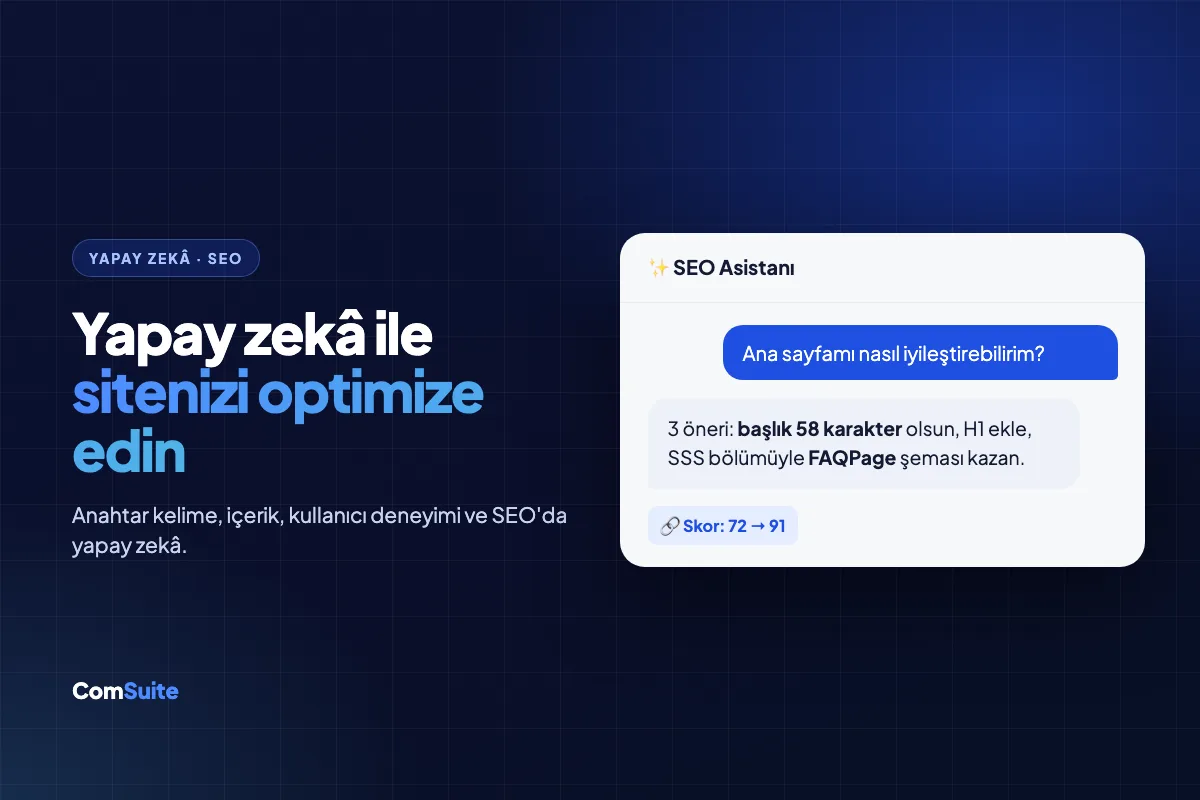
AI-powered website optimization is the practice of systematically improving site performance by integrating machine learning and natural language processing technologies into SEO, content, and user experience workflows. In this field, AI is not just an automation tool; with its ability to interpret data, prioritize tasks, and forecast outcomes, it acts as a strategic decision-support system. As of 2025, most of Google's search algorithms rely on AI-based models (RankBrain, MUM, Gemini), so optimizing websites to work well with these technologies has become a competitive necessity.
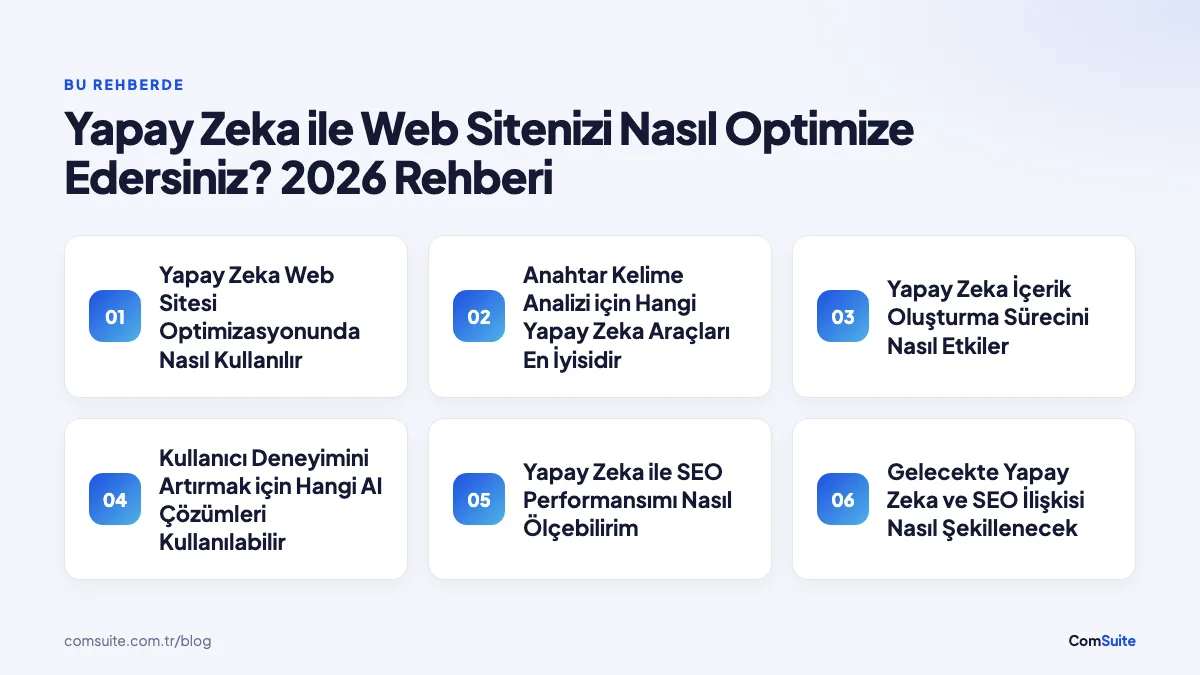
Which AI Tools Are Best for Keyword Analysis?
Traditional keyword research focused on search volume and competition scores. AI-powered tools, on the other hand, analyze search intent, semantic relationships, and trend shifts all at once.
Here is a comparison of the leading tools and their key features:
| Tool | Core AI Feature | Standout Area |
|---|---|---|
| Semrush Copilot | Automated suggestions and gap analysis | Competitor comparison |
| Ahrefs AI | Traffic potential forecasting | Backlink + content opportunities |
| Surfer SEO | NLP-based content scoring | On-page optimization |
| Google Search Console + Gemini | Query clustering and trend detection | Organic performance analysis |
The shared advantage of these tools is that they can classify thousands of keywords by intent in seconds: informational, navigational, or transactional. Matching intent correctly directly affects a page's ranking potential.
How Does AI Affect the Content Creation Process?
AI transforms the content process in three stages: planning, production, and optimization.
Content Planning
AI tools crawl competitor pages to identify which subheadings, questions, and semantic terms are missing. For example, Clearscope and MarketMuse generate a "content gap" report for your target keyword, backing your editorial plan with data.
Content Production
Large language models such as GPT-4o, Claude, or Gemini speed up draft creation; however, experts agree that these outputs must always be verified by a human editor. Because Google's Helpful Content Update prioritizes originality and expertise signals, publishing raw AI output carries a ranking risk.
Content Optimization
- Automatically calculating readability scores (using metrics such as Flesch-Kincaid)
- Balancing semantic keyword density
- Suggesting heading hierarchy and meta descriptions
- Identifying internal linking opportunities
Which AI Solutions Can Improve User Experience?
User experience (UX) has become a direct ranking factor through Google's Core Web Vitals framework. AI is used in this area for both measurement and improvement.
Personalization
AI-based personalization engines (such as Dynamic Yield or Optimizely) change content, product recommendations, or CTA layouts in real time based on a user's past behavior. In many cases, this approach delivers a measurable increase in conversion rates.
Chatbots and Conversational Interfaces
Chatbots powered by large language models answer visitors' questions instantly, reducing the bounce rate. This extends time on page and creates an indirect SEO signal.
Technical Speed Optimization
AI-powered caching algorithms from Cloudflare and similar CDN providers automatically optimize page load times. An LCP (Largest Contentful Paint) score under 2.5 seconds, the target value in Google PageSpeed Insights, is easier to achieve with these tools.
How Can I Measure SEO Performance with AI?
Performance measurement is the most critical stage of optimization; this is where AI turns raw data into meaningful insights.
- Automated anomaly detection: The AI-based insights panel in Google Analytics 4 proactively alerts you to traffic drops or unusual spikes.
- Predictive analysis: Some platforms (such as Conductor and BrightEdge) forecast the likely impact of current content changes on rankings.
- Competitor monitoring: AI tools automatically track content updates and ranking changes on competitor sites and deliver weekly reports.
- Conversion attribution: Machine learning-based attribution models determine which page or keyword contributes to sales more accurately than the last-click model.
One point to keep in mind during measurement is that AI recommendations should not be evaluated out of context. Algorithm updates, seasonal fluctuations, and industry dynamics make human judgment essential when interpreting data.
How Will the Relationship Between AI and SEO Evolve in the Future?
Google's AI Overviews (formerly known as SGE) feature presents AI-generated summaries at the top of search results. This development is increasing the share of "zero-click searches," while also creating a new opportunity for traffic directed to the sources that AI cites.
Experts expect the following trends to be decisive in the coming period:
- GEO (Generative Engine Optimization): Structuring content so it gets cited in AI search engines.
- Voice and multimodal search: Content architecture that can respond to visual and voice queries will become increasingly important.
- Real-time content updates: AI tools will automatically detect pages that are losing rankings and suggest updates.
Optimizing your website with AI is not a one-time task; it is a process that continuously learns and adapts. When the right tools are combined with human expertise, you can achieve both short-term ranking gains and long-term organic growth.
Frequently Asked Questions
What is website optimization with AI?
Website optimization with AI is the process of improving your website using data analysis, content recommendations, and automated adjustments to enhance user experience and boost search engine rankings.
Which tools can be used for AI website optimization?
Tools such as Google Analytics, SEMrush, Ahrefs, and Yoast SEO can be used for AI-based optimization. These tools simplify the optimization process by providing data analysis and content recommendations.
How does AI generate content recommendations?
By analyzing user behavior and identifying popular keywords, AI can suggest the most relevant content for your target audience. This helps you drive more engagement and conversions.
How can I increase my website speed with AI?
AI can improve performance by automating techniques such as image optimization, caching strategies, and server response time improvements to speed up your website.
How do you develop SEO strategies with AI?
By analyzing search engine algorithms and tracking user search trends, AI can make your SEO strategies more effective. This helps you achieve better rankings and more organic traffic.