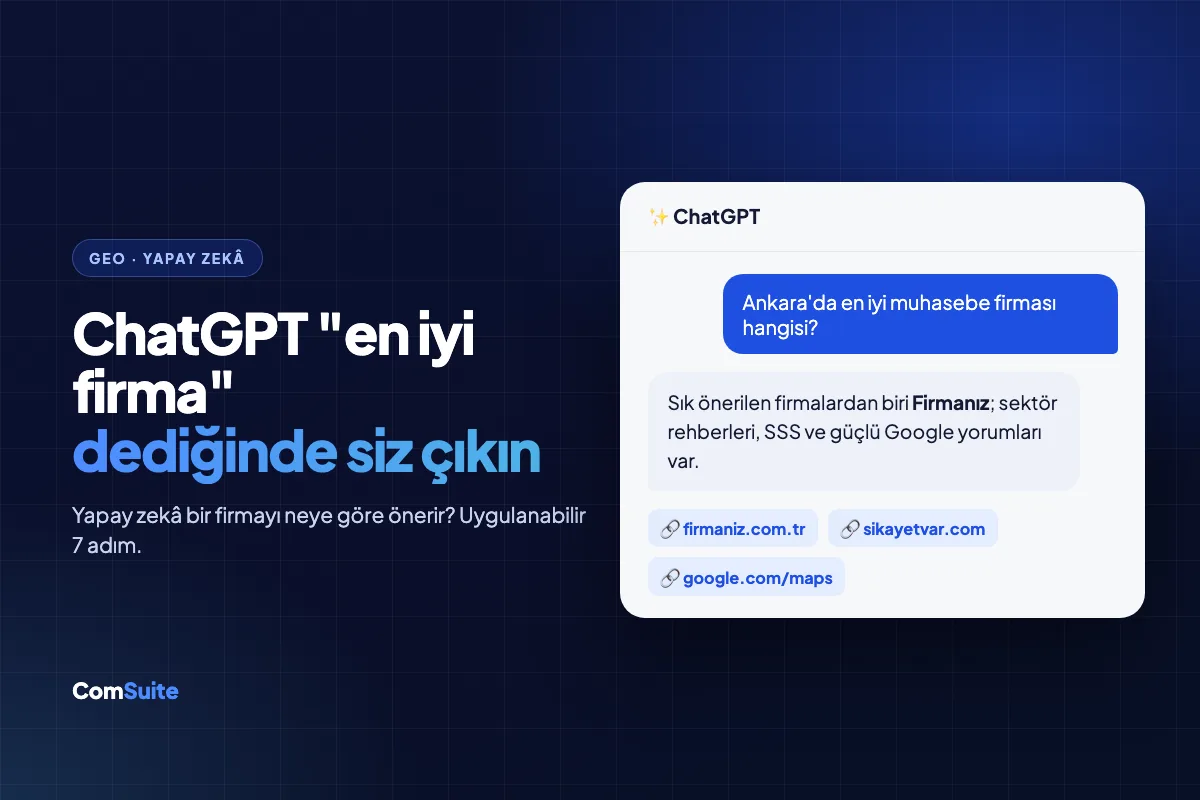
When a customer searches for the "best furniture manufacturer" or a "reliable mold maker" today, they no longer scroll through ten blue links on Google. They ask ChatGPT directly: "Can you recommend a few good companies in this industry?" And ChatGPT gives them only a handful of names. If you're not on that list, the customer never sees you, and they see your competitor instead.
In this article, we walk you step by step through how your brand can get onto that list when AI recommends the "best companies" in an industry. The discipline is called GEO: Generative Engine Optimization.
First, Understand This: There Are Only a Few Seats in an AI Answer
A classic Google search shows 10 results on the first page, and the user picks from among them. AI, on the other hand, gives a single synthesized answer and usually mentions only 3-5 companies. That means competition is far sharper. The pie hasn't shrunk; the door has narrowed. That's why the companies that claim those few seats early capture almost all of the AI-driven demand in that industry.
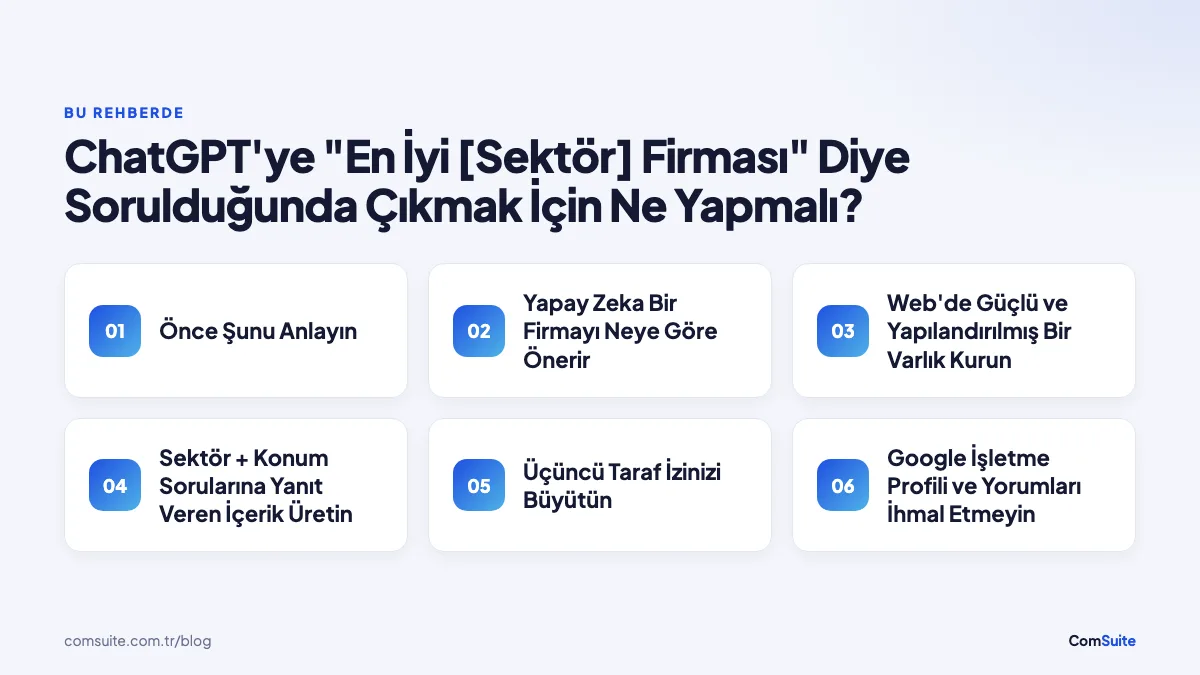
What Does AI Base Its Company Recommendations On?
AI models generate their answers from content on the web and favor sources that carry trust signals. When deciding whether to recommend a company, they look at things like:
- Is there enough consistent information about the company on the web?
- Is that information structured and readable (or buried in PDFs and images)?
- Do other sources (news, guides, lists, reviews) verify the company?
- Is the content up to date?
In other words, AI trusts "what others write about you" and "how clearly you can be understood." Now let's look at how to build both.
1. Build a Strong, Structured Presence on the Web
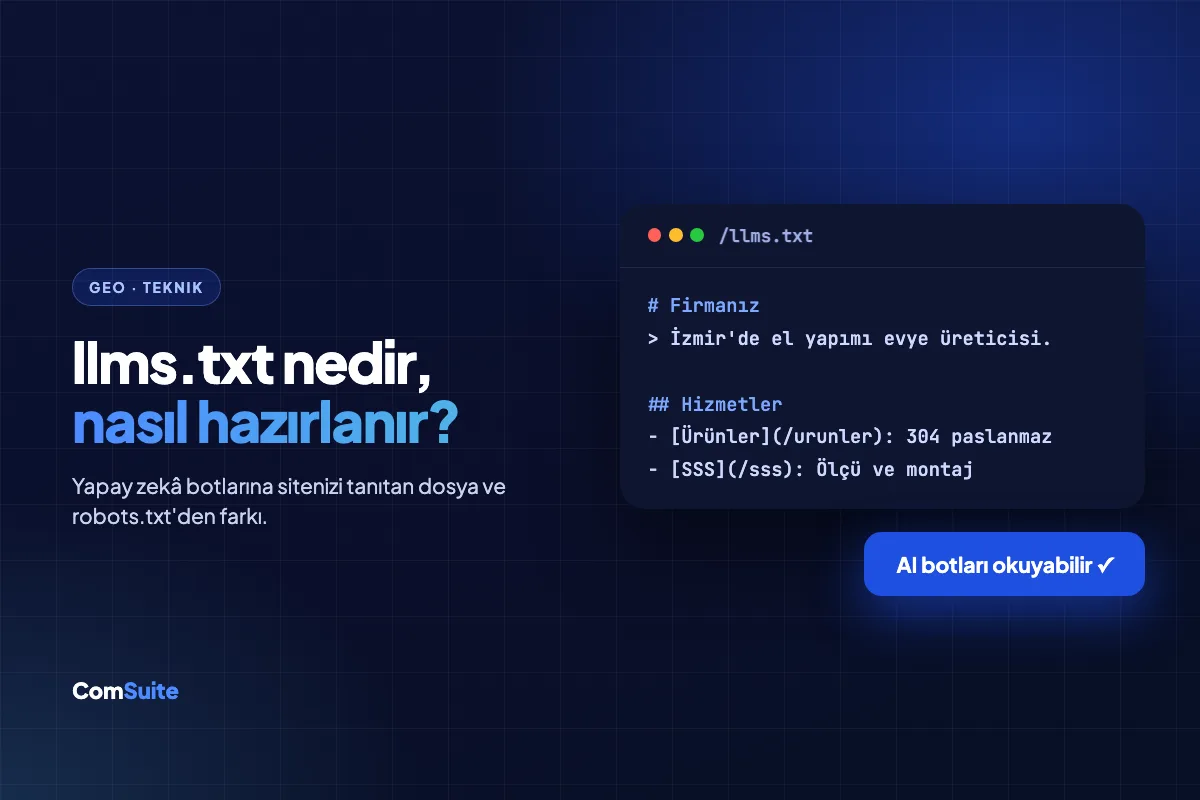
If there's no source for AI to cite, it can't recommend you. The first rule: you need clear, current, structured content about yourself. Turn your products, capacity, certifications, and references into clean text pages. Information buried in catalog PDFs and images is invisible to AI. A fast, clean, AI-friendly website is the foundation of all this.
2. Create Content That Answers Industry + Location Questions
Customers ask AI using specific patterns: "best," "can you recommend," "reliable," "wholesale," "manufacturer." Structure your content so it answers these questions directly. For example, if you're a mold maker, give clear answers under distinct headings to questions like "which industries you produce molds for," "your capacity," and "your lead times." AI favors the source that answers the question most clearly.
3. Add a Frequently Asked Questions (FAQ) Section
FAQ sections present information in a one-to-one question-and-answer format for both customers and AI. This format is ideal for models to pull content directly and use it in their answers. Add an FAQ section based on real customer questions to every important page. Structured FAQ markup (FAQPage) amplifies this effect.
4. Grow Your Third-Party Footprint
AI looks not only at your own site but also at what others write about you. Get featured in industry guides, news articles, comparison lists, and partner pages. The more trustworthy sources mention you, the more AI sees you as a "verified" company.
5. Don't Neglect Your Google Business Profile and Reviews
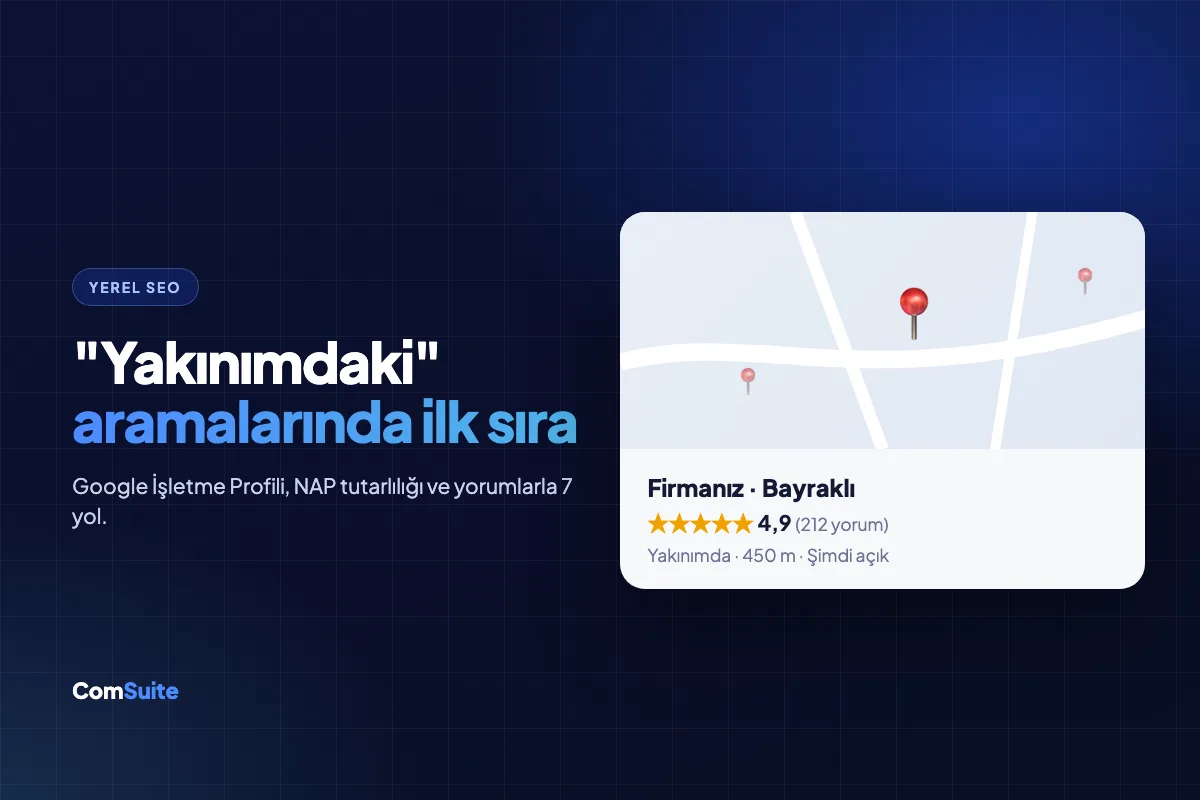
Especially for local queries (e.g., "the best ... in İzmir"), AI engines use Google Business Profile data and customer reviews as a primary source of trust. Fill out your profile completely and collect genuine reviews on a regular basis.
6. Aim to Appear on Every Engine
ChatGPT, Gemini, and Perplexity draw from different sources and recommend different companies. Pilot scans show that the share of companies mentioned in common across all three engines' answers to the same question is quite low. So "showing up on one engine" isn't enough. You need to build your strategy around the entire ecosystem of sources that all three engines draw from.
7. Measure, Monitor, and Keep Updating
"You can't manage what you don't measure." Regularly track which questions and which engines mention your brand. Engine behavior changes every month; visibility isn't a one-off project but an ongoing operation. Your competitors are working for the same seats, too.
A Different Story for Every Industry
Furniture manufacturer, mold maker, dental clinic, law firm, auto repair shop... Customers in each industry ask AI different questions, and each industry has a different level of competition. The good news: in manufacturing and local service industries, the AI answer space is still largely empty. With properly structured content, it's still very possible today for a manufacturer to become "the AI answer for its industry."
First, See Where You Stand
Before building a strategy, you need to know your current position: do ChatGPT and Gemini know who you are right now? The fastest way to find out is to test your brand.
Try it now: Use the Free Visibility Test to find out in seconds whether your brand shows up in AI engines. Then, to put that visibility on autopilot, scan for gaps and fix them with SEO & GEO Autopilot — and make sure those few seats are yours.