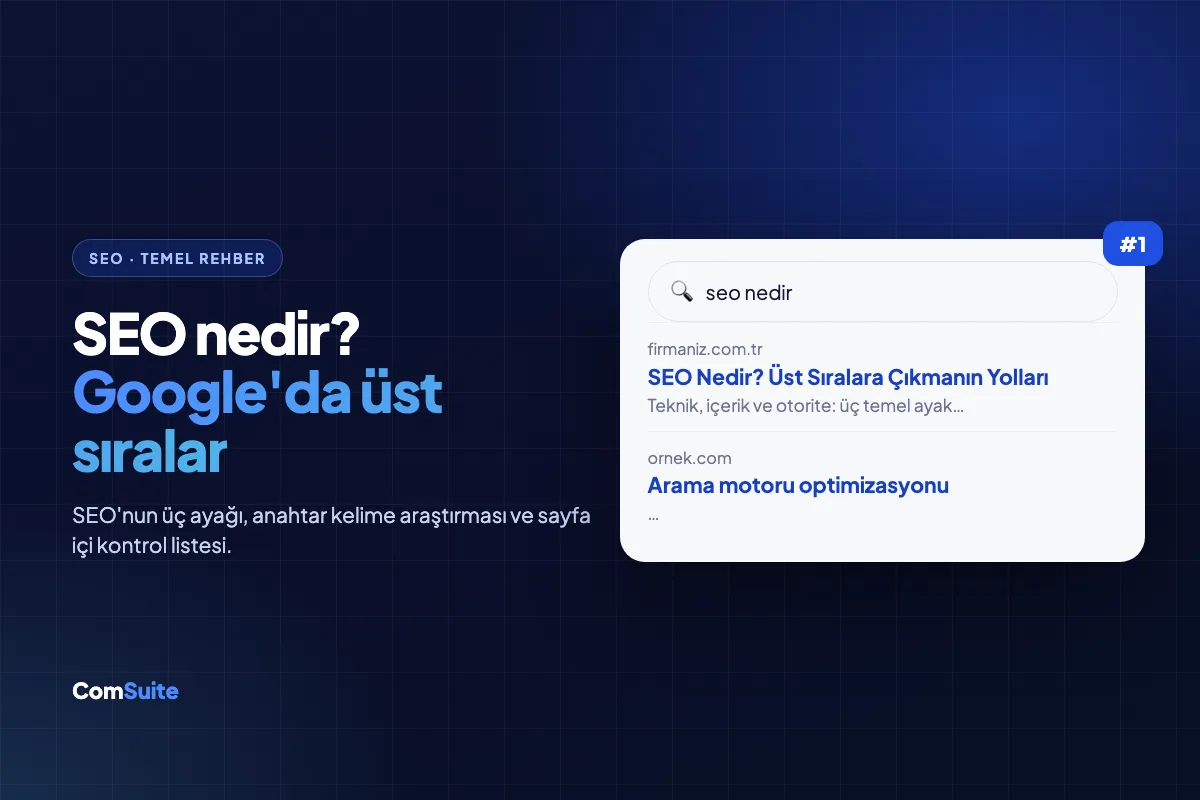
SEO (Search Engine Optimization) is the set of practices that helps your website appear higher in search engines like Google. In short, SEO aims to put your site in front of potential customers when they search for a product or service. SEO is the most sustainable way to attract visitors organically, without paying for ads.
Why Is SEO So Important?
When a user searches on Google, the click-through rate for results on the first page is very high, while hardly anyone makes it to the second page. In other words, if your site isn't ranking near the top, it might as well be invisible. Good SEO:
- Delivers a steady stream of free organic traffic.
- Builds trust and authority for your brand.
- Reduces your dependence on your advertising budget.
The Three Core Pillars of SEO
1. Technical SEO
Technical SEO ensures that search engines can crawl and understand your site without problems. It covers site speed, mobile compatibility, an automatic sitemap, clean URL structure, and structured data (schema). A site that loads slowly or looks broken on mobile will fall in the rankings, no matter how good its content is.
2. Content (On-Page) SEO
Google rewards the content that gives users the most helpful answer. That's why your content should:
- Include your target keyword in the title and the first paragraph,
- Be well organized with subheadings (H2, H3),
- Truly answer the user's question,
- Be comprehensive enough (typically 800+ words).
3. Authority (Off-Page) SEO
Links from other trustworthy websites (backlinks) act like a "vote" in Google's eyes. The more high-quality sites mention you, the stronger your authority becomes. Creating quality content is the best way to earn links naturally.
How to Do Keyword Research
The starting point of SEO is knowing what your target audience is searching for. Instead of broad terms like "furniture," more specific (long-tail) keywords like "Istanbul handmade wooden furniture" typically face less competition and convert better. Focus each page on a single primary keyword.
On-Page SEO Checklist
- Title tag: A unique title of no more than 60 characters that includes your keyword.
- Meta description: A 155-character summary that encourages clicks.
- Image alt text: Text that describes your images.
- Internal links: Links pointing to other pages on your site.
- Readability: Short paragraphs, bullet points, clear headings.
When Do SEO Results Arrive?
SEO is a marathon, not a sprint. It usually takes a few months to see the first results, but they last. When you stop running ads, traffic stops; good SEO keeps bringing in visitors even while you sleep.
A New Dimension in Modern SEO: GEO
Users no longer search only on Google; they also search in AI assistants like ChatGPT and Gemini. That's why, in addition to classic SEO, GEO (Generative Engine Optimization) has become important. Automatic schema, llms.txt, and clear, structured content help your brand show up in AI answers too.
Where Should You Start?
The good news: modern website builders automate most of the core SEO work. With automatic sitemap, schema, and meta management, they take the technical burden off your shoulders so you can focus on creating quality content. With small but consistent steps, you'll see your search rankings climb within a few months.
Frequently Asked Questions
What is SEO in short?
SEO (Search Engine Optimization) is the set of practices that helps your website rank higher in search engines like Google. The goal is to earn organic visitors without paying for ads.
When do SEO results arrive?
SEO is a marathon. The first results usually appear within a few months, but unlike ads, they last; your site keeps bringing in visitors even while you sleep.
How many words should I write for SEO?
While there's no strict rule, comprehensive content that truly answers the user's question (usually 800 words or more) performs better in search engines.
How do I choose a keyword?
Think about what your target audience is really searching for. Instead of broad terms like "furniture," specific (long-tail) keywords like "Istanbul handmade wooden furniture" face less competition and convert better.
What should I do if I have no technical SEO knowledge?
Modern website builders automate most technical SEO tasks, such as sitemaps, schema, clean URLs, and meta management. You can focus on creating quality content.
What is the difference between SEO and GEO?
SEO aims to rank high in search engines like Google. GEO aims to get your brand recommended in the answers of AI assistants like ChatGPT and Gemini. The two complement each other.
Ready? With ComSuite, you can build a professional, SEO- and AI-friendly website in minutes, with no coding. Create your free account and go live today.