What Makes a Website Successful?
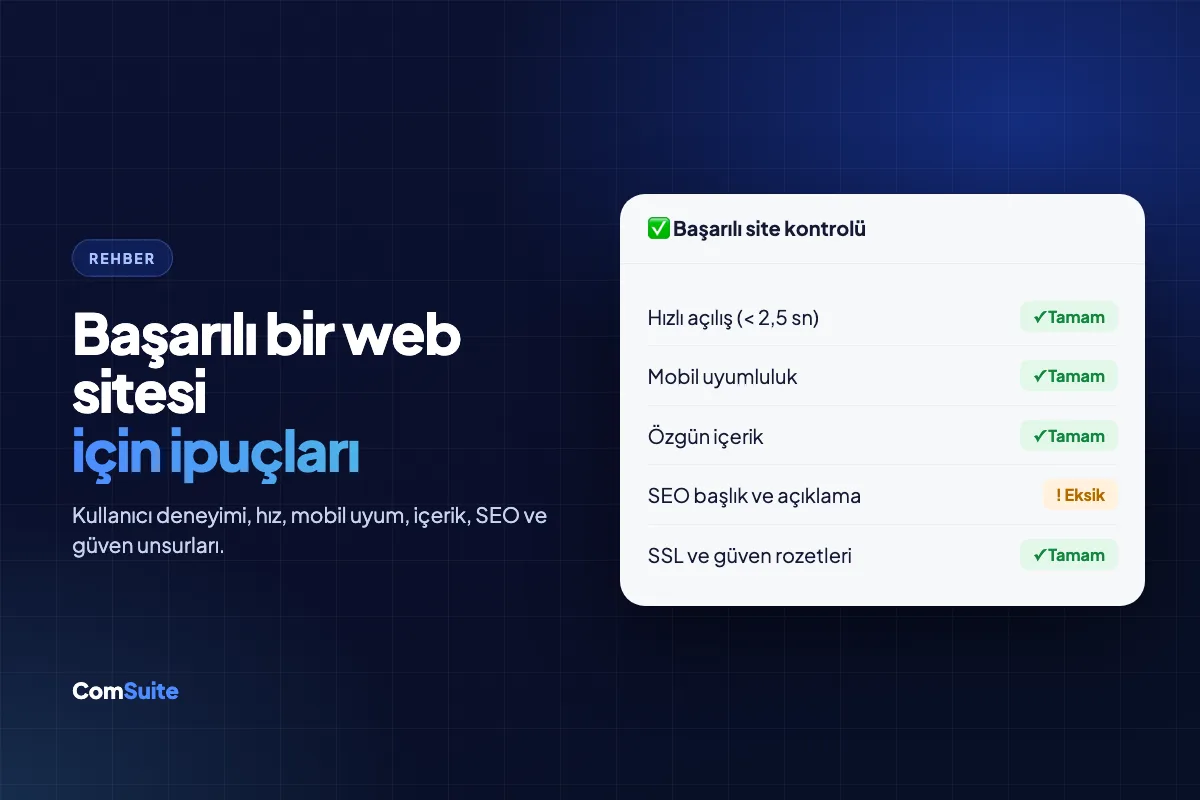
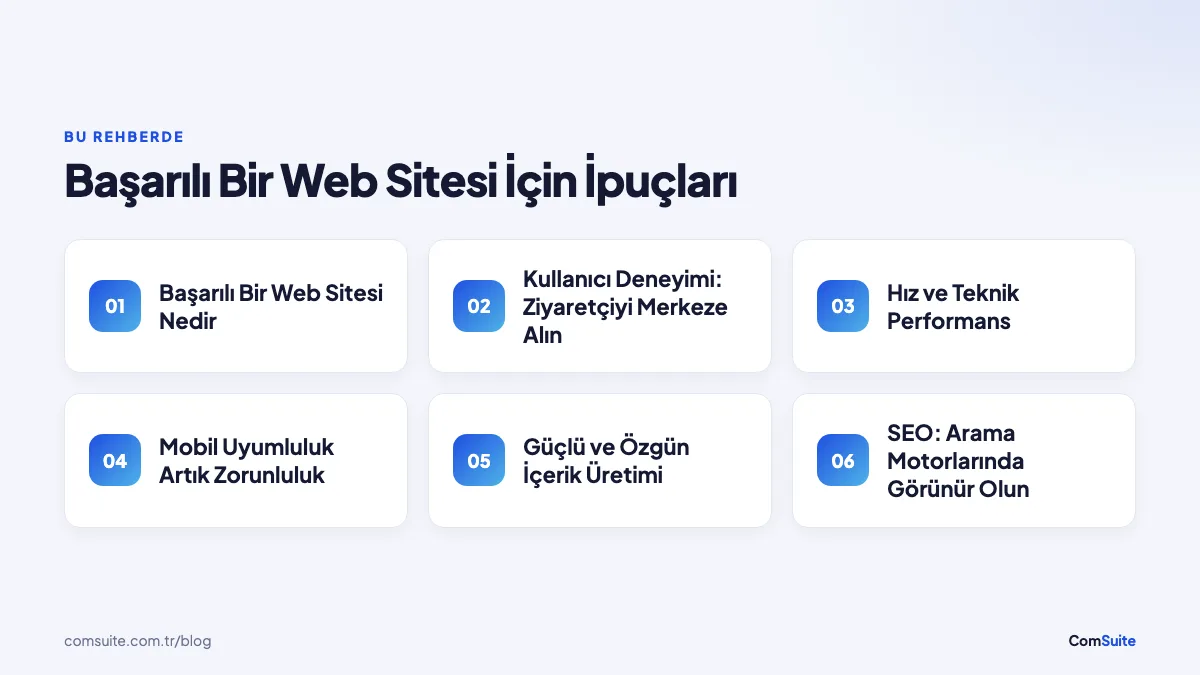
A successful website is a digital platform where visitors easily find what they're looking for, pages load fast, the brand looks trustworthy, and every element serves the goals of the business. Simply put, any site that combines great design with strong content has the potential to turn visitors into customers. In this article, we'll walk through the key components of building a successful website, step by step.
User Experience: Put the Visitor First
The most critical measure of a website's success is the experience visitors have on it. Known as user experience (UX), this concept covers everything from menu structure and color choices to page layout and button placement.
- Intuitive navigation: Users should be able to reach the information they need in two or three clicks at most. Complicated menus drive visitors away.
- Readable typography: Font size, line spacing, and color contrast should make your content easy to read.
- Consistent design language: Maintain a consistent visual identity across colors, icons, and images.
From the moment visitors land on your site, they should understand what to do next. Uncertainty increases bounce rates, which in turn hurts your search engine rankings.
Speed and Technical Performance
Page load speed is vital for both user satisfaction and SEO. Studies show that if a page takes more than three seconds to load, the vast majority of visitors leave.
You can follow these steps to improve technical performance:
- Optimize your images: Large images significantly slow down page load times. Use modern formats like WebP and compression tools.
- Use caching: Browser caching dramatically shortens load times for returning visitors.
- Use a content delivery network (CDN): A CDN speeds up global access by distributing your site's content across servers in different geographic locations.
- Avoid unnecessary plugins: Especially on WordPress-based sites, using too many plugins hurts performance.
Google's Core Web Vitals are the standard metrics used to measure technical performance. Tracking them regularly is an integral part of the journey to a successful website.
Mobile Compatibility Is No Longer Optional
More than half of internet traffic worldwide comes from mobile devices. That's why a mobile-friendly (responsive) design ranks at the top of the criteria for a successful website. Mobile compatibility isn't just about fitting the screen; touch-friendly button sizes, easy scrolling, and fast loading all count as well.
With its mobile-first indexing policy, Google evaluates sites based on their mobile versions first. Neglecting the mobile experience therefore directly weakens your visibility in search engines.
Creating Strong and Original Content
Content is the backbone of a successful website. Quality content is what attracts visitors, keeps them engaged, and brings them back. Original, informative, and valuable content both delights users and lifts you up in search rankings.
What to Keep in Mind When Building a Content Strategy
- Know your target audience: You can't create effective content without knowing who you're writing for. Building user personas can guide you through this process.
- Do keyword research: Targeting the right keywords is the foundation of attracting organic traffic.
- Keep it up to date: Pages with outdated or inaccurate information damage credibility. Updating your content periodically is essential.
- Use visual and video content: Adding images, infographics, and videos to text-heavy pages boosts engagement.
SEO: Be Visible in Search Engines
Search engine optimization (SEO) is an essential part of building a successful website. Even if you design a great site, you won't reach your goals if no one can find it.
The core SEO practices are:
- Title tags and meta descriptions: Write a unique, compelling title and description for every page.
- Internal linking structure: Build logical links between pages to improve the user experience and help crawlers discover your site.
- Backlinks: Links from trustworthy sources increase your site's authority.
- Technical SEO: An XML sitemap, a robots.txt file, and structured data markup help search engines understand your site better.
Security and Trust Signals
Visitors want to be sure a site is trustworthy before sharing their personal information. An SSL certificate (HTTPS), regular updates to protect against outdated software components, and a transparent privacy policy all strengthen your site's credibility.
In addition, social proof such as customer reviews, testimonials, certifications, and award badges is effective at earning visitors' trust. On e-commerce sites in particular, trust symbols directly affect conversion rates.
Conversion-Focused Design
A successful website doesn't just attract traffic; it turns that traffic into tangible results. Whether the goal is a sale, a form submission, or a newsletter signup, every page should have a clear purpose and a matching call to action (CTA).
- Prominent CTA buttons: Use clear wording such as "Buy Now," "Try It Free," or "Contact Us."
- Run A/B tests: Test different headlines, colors, and layouts to identify the best-performing version.
- Optimize your landing pages: Dedicated landing pages for ad campaigns significantly increase conversion rates.
Analytics Tracking and Continuous Improvement
Building a successful website is not a one-time job; it's an ongoing process. Analytics platforms such as Google Analytics, Google Search Console, and heatmap tools help you understand user behavior and spot opportunities for improvement.
Regularly analyze which pages get the most traffic, where users leave your site, and which content drives the most conversions. Making data-driven decisions delivers far more reliable results than relying on gut instinct.
Conclusion: Success Is a Package Deal
Building a successful website requires addressing speed, design, content, SEO, security, and conversion optimization together. Neglecting any one of these weakens the impact of your investments in the others. Think of your site as a living organism: with regular maintenance, updates, and improvements, it grows, evolves, and helps you reach your goals.
Frequently Asked Questions
What is the most important tip for a successful website?
The most important tip for a successful website is to put user experience first. Fast load times and easy navigation are critical to keeping visitors from leaving your site.
How do you create good content?
To create good content, you need to know your target audience and offer valuable information that addresses their needs. Also, make sure your content is SEO-friendly.
What should I pay attention to when designing my website?
Choose a clean, user-friendly interface for your website's design. Color harmony, readability, and mobile compatibility matter, too.
What role does SEO play in a website's success?
SEO increases your website's visibility in search engines, helping you attract more organic traffic. This directly impacts your site's success.
How should social media be used for a successful website?
Social media is an effective tool for promoting your website and engaging with your target audience. You can drive traffic by posting regularly.
How can I improve my website's security?
To improve your website's security, use an SSL certificate, keep everything updated regularly, and choose strong passwords.